
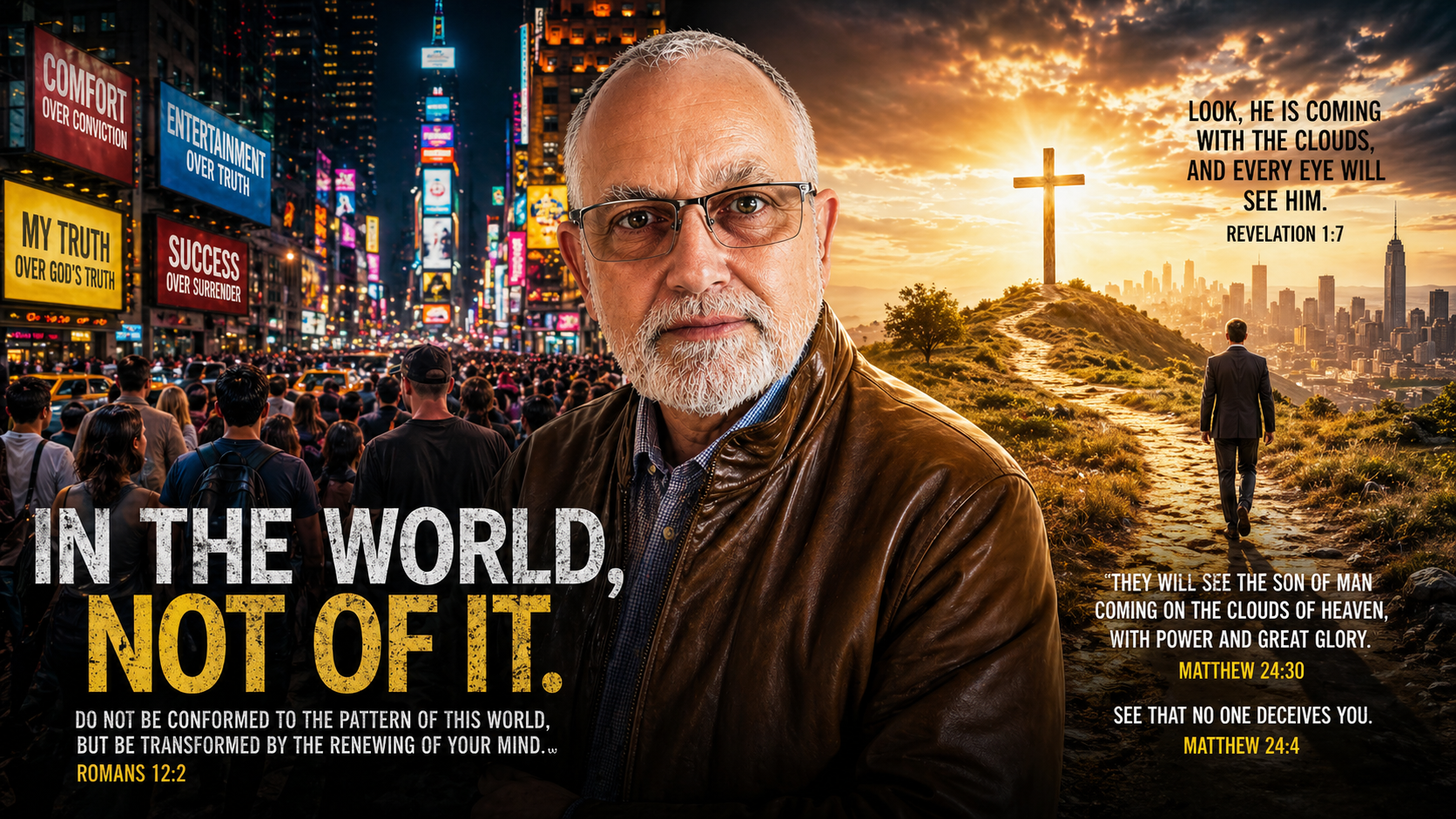
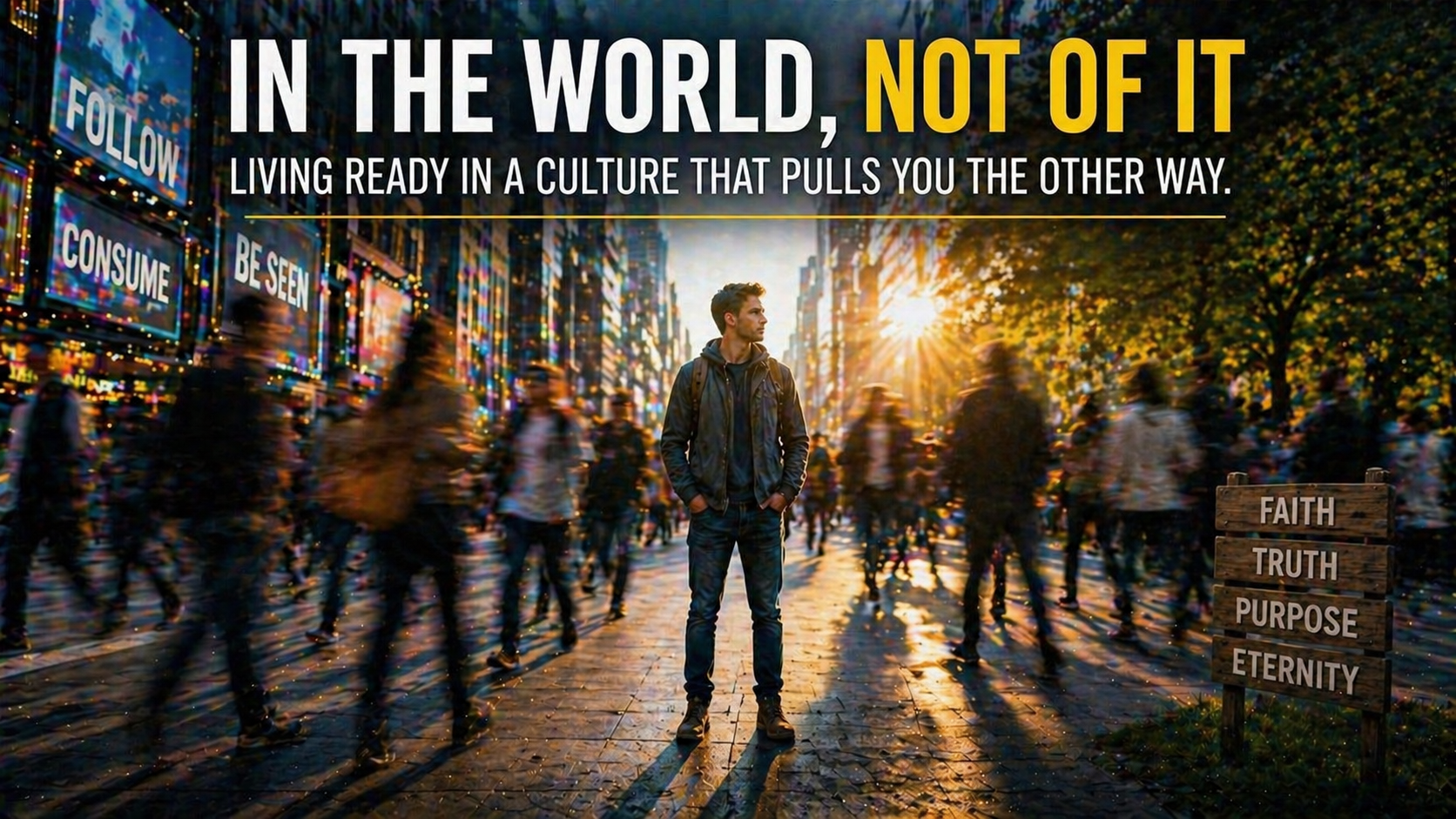
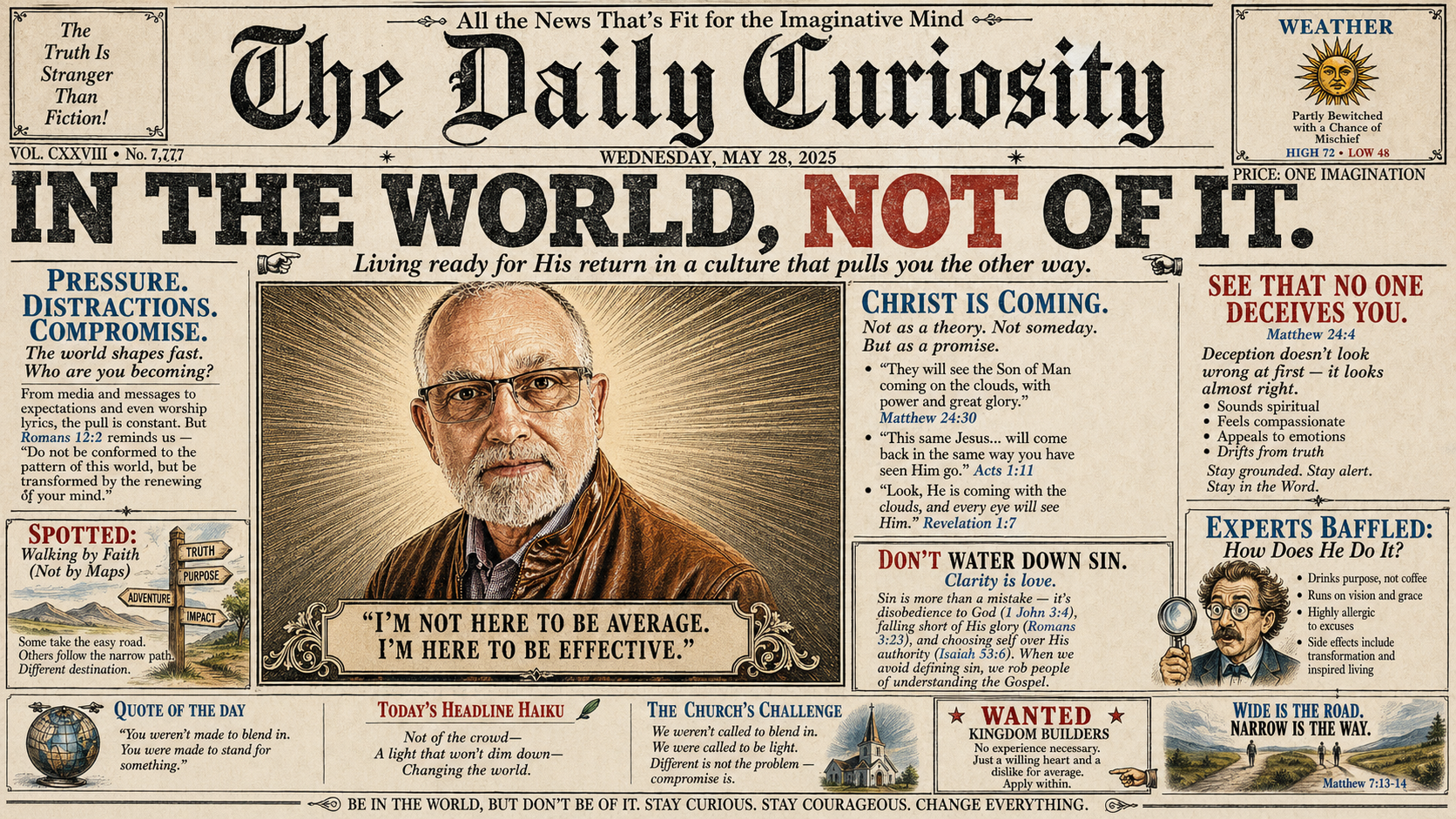
In the World, Not of It – Living Ready in a Culture That Pulls You the Other Way.
Let’s talk honestly for a moment.
Most believers feel it, even if they don’t always put it into words. There’s a quiet tension running through everyday life. You feel it when you hear certain conversations, when you see what’s being celebrated, and even sometimes when you sit in church and think, “something feels slightly off here.”
It’s that sense of being caught between two influences, one pulling you into the flow of culture, and another calling you to stand apart from it.
And right in the middle of that tension sits a truth that we don’t hear nearly enough anymore:
Christ is coming again.
Not as a distant idea, not as poetic language, but as a real, defining moment in history that everything is moving towards.
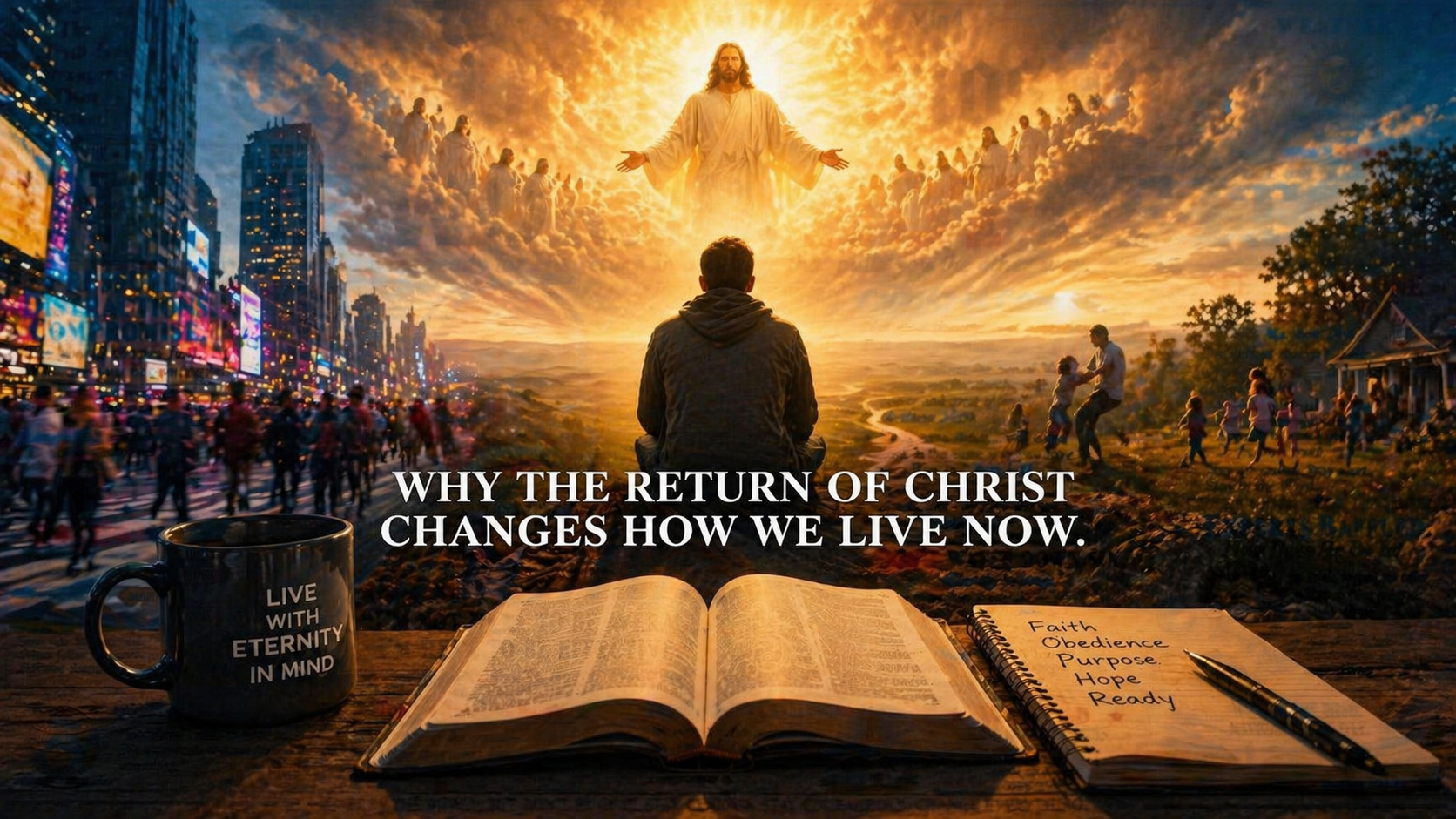
Why the return of Christ changes how we live now.
When Jesus spoke about His return, He didn’t present it as a side topic. It wasn’t optional theology for the curious, it was central to how His followers were meant to live.
He said that one day He would be seen “coming on the clouds of heaven, with power and great glory” (Matthew 24:30). Luke records it similarly: “They will see the Son of Man coming in a cloud with power and great glory” (Luke 21:27). John, in Revelation, brings it to a climax: “Look, He is coming with the clouds, and every eye will see Him” (Revelation 1:7).
And the angels made it unmistakably clear:
“This same Jesus, who has been taken from you into heaven, will come back in the same way you have seen Him go into heaven.” (Acts 1:11)
Now here’s where it becomes personal. If we genuinely believe that, it quietly reshapes everything:
We start thinking differently about what matters. We become more aware of how we’re living. We begin to weigh our choices with eternity in mind.
Because if He is returning, then this life isn’t just something to get through – it’s something we are being prepared through.
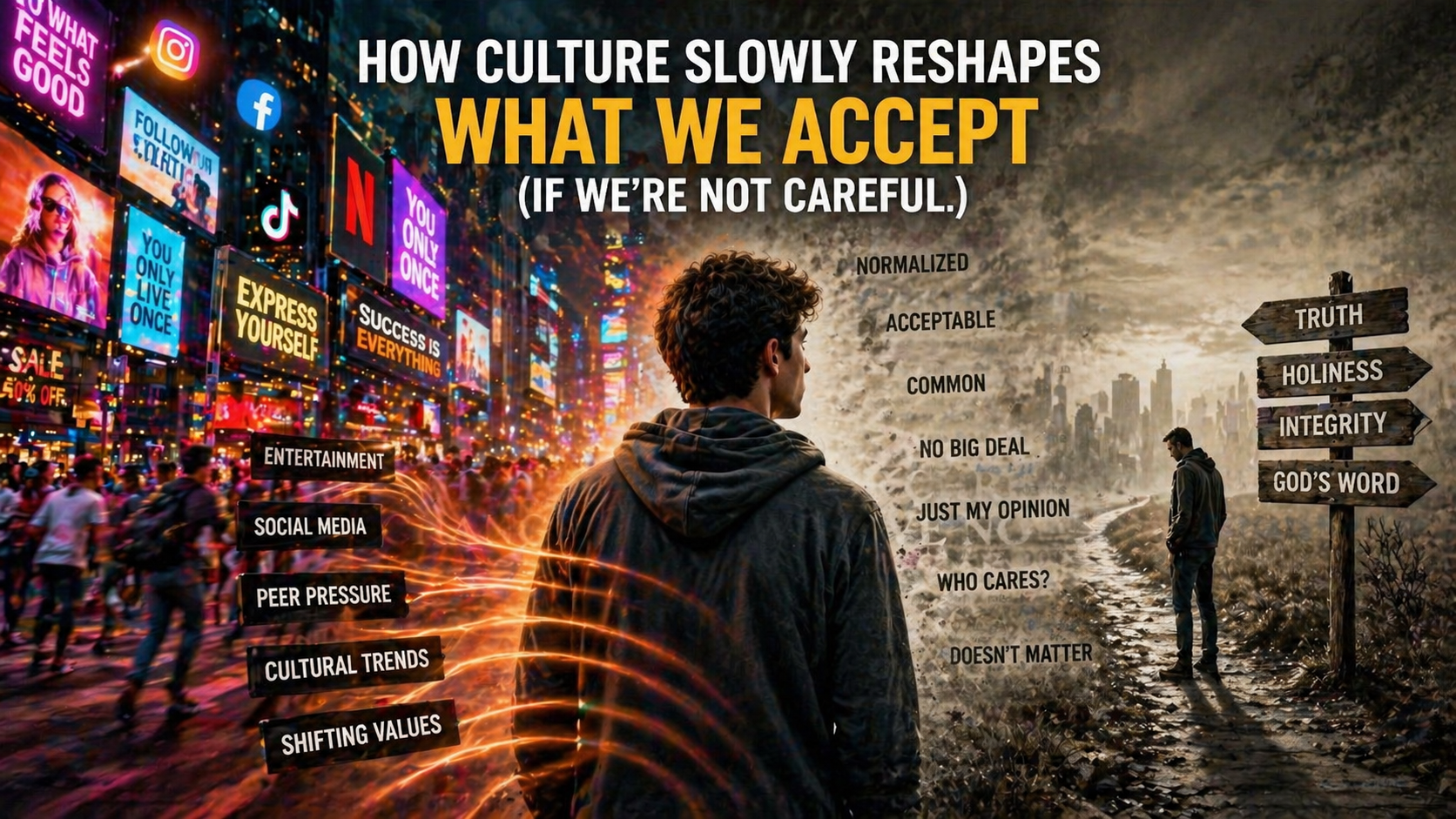
How culture slowly reshapes what we accept (if we’re not careful.)
The challenge isn’t always loud or obvious. Most of the time, it’s subtle.
It’s not that people wake up and decide to walk away from truth. It’s more that things get adjusted, little by little, until what once felt clear starts to feel negotiable.
- We soften what we once held firmly.
- We reframe things, so they feel more acceptable.
- We avoid certain truths because they feel uncomfortable to say out loud.
Before long, without realising it, we’re no longer standing in contrast to the world, we’re quietly echoing it.
Paul’s words still speak directly into this:
“Do not be conformed to the pattern of this world, but be transformed by the renewing of your mind.” (Romans 12:2)
That word conformed carries the idea of being shaped from the outside.
And if we’re honest, that shaping is happening constantly:
- Through media.
- Through conversations.
- Through expectations.
And, if we’re willing to admit it, even through some of our modern worship lyrics.
That last one can be uncomfortable to say, but it matters.
Because worship doesn’t just express belief, it forms it.
- If the songs we sing are shallow, we become shallow.
- If they are vague, our understanding becomes vague.
- If they centre more on us than on God, our faith slowly shifts in the same direction.
Now hear this carefully, this isn’t a criticism for the sake of it. There are many powerful, Christ-centred songs being written today.
But there is also a growing trend where:
- Sin is barely mentioned.
- The cross is implied but not explained.
- Holiness is absent.
and the focus subtly drifts toward experience over truth. And when that becomes consistent, it shapes how people think about God… without them even realising it.
The danger is not that culture exists. The danger is when it starts to define what we believe is right, even within the Church.
When ‘staying relevant’ starts to pull us off centre.
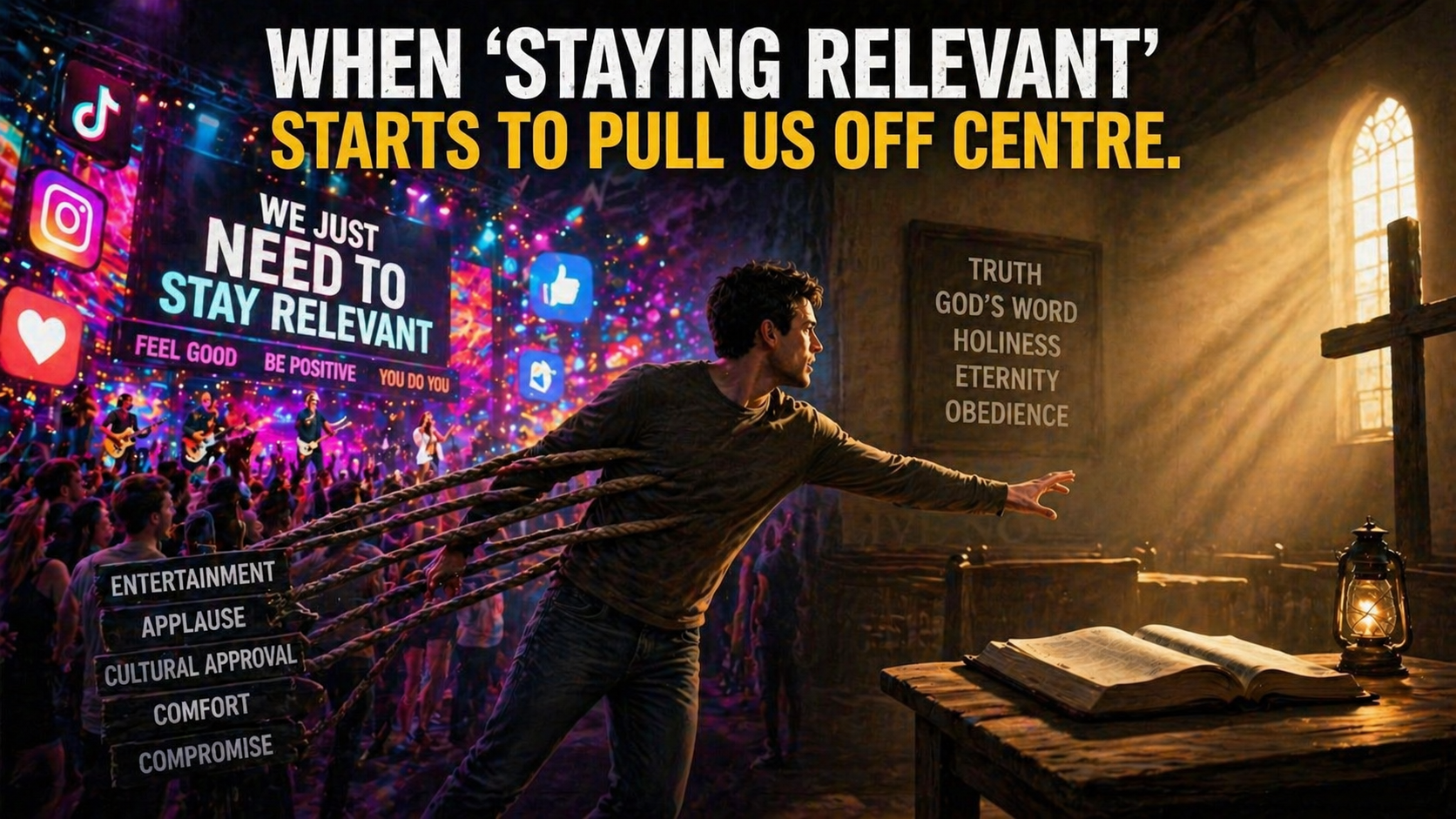
You’ll often hear the phrase, “We just need to stay relevant.” And yes, communication matters. Clarity matters. Being understood matters.
But there’s a line, and it’s a fine one. Because when relevance becomes the priority, truth can slowly become adjustable.
And you start to notice small shifts:
- Messages that inspire but don’t challenge.
- Teaching that comforts but doesn’t correct.
- Conversations about faith that avoid anything costly.
And this is where something needs to be said, plainly, honestly, and pastorally.
A number of weeks ago, I heard a message where the word “sin” was mentioned and talked about, but carefully left undefined. There was no clarity, no substance, no description. It was spoken about, but not explained.
And that’s a problem. Because in today’s culture, sin has been rebranded.
It’s often reduced to:
- A mistake.
- An error of judgement.
- A personal struggle.
or simply “not being your best self.”
But biblically, sin is far more serious, and far more clearly defined.
Sin is:
- Disobedience to God’s revealed will (1 John 3:4)
- Falling short of His glory (Romans 3:23)
- Choosing self over God’s authority (Isaiah 53:6)
Yes, it is an affront to His holiness. Yes, it grieves His heart.
But it is also specific. And here’s the weight of it:
- When we speak about sin without clarity, we leave people guessing.
- When we avoid defining it, we remove the very thing the Gospel came to address.
Because if people don’t understand what sin is…They won’t understand why they need a Saviour. And for some, that moment in which they hear the Gospel may be the only time they ever hear it clearly.
So, this isn’t about being harsh, it’s about being faithful.
Truth, spoken clearly, is not unloving. It is the most loving thing we can offer.
Recognising the times without losing our footing.
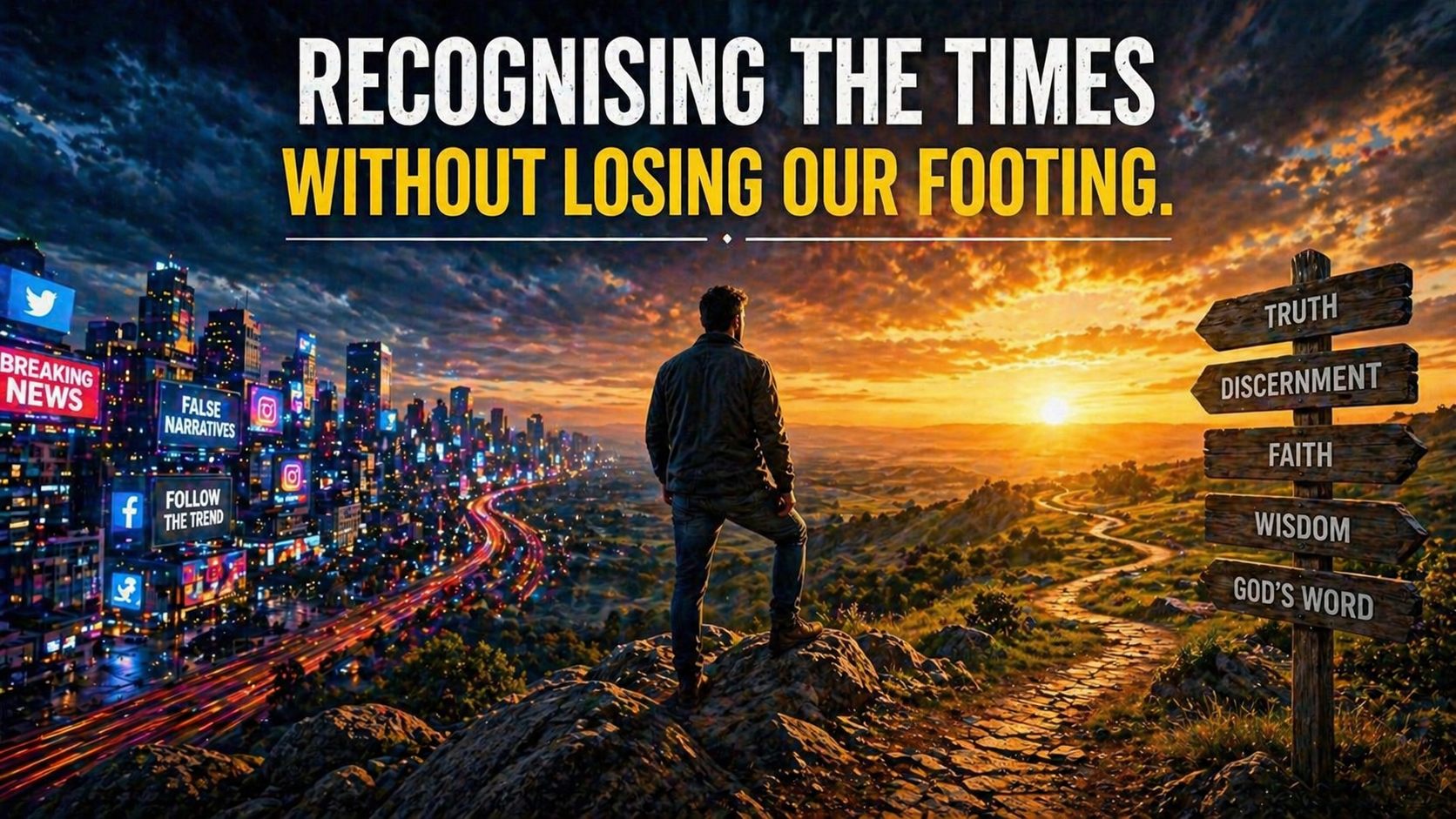
It doesn’t take much to see that things are shifting.
There’s a growing confusion around what is true. Right and wrong feel increasingly fluid. Things that would have been questioned years ago are now normalised.
Jesus described a time like this, not to create fear, but to create awareness.
He said…”it would be like the days of Noah” (Matthew 24:37–39). Life would carry on as usual, people building, planning, celebrating. And yet, underneath it all, something significant would be approaching.
That’s what makes it so striking. It’s not chaos that catches people off guard, it’s normality. Life just continues… until suddenly it doesn’t.
And that’s why awareness matters. Not anxiety, not panic, but a steady, grounded awareness that keeps your footing secure.
Why deception rarely looks wrong at first.
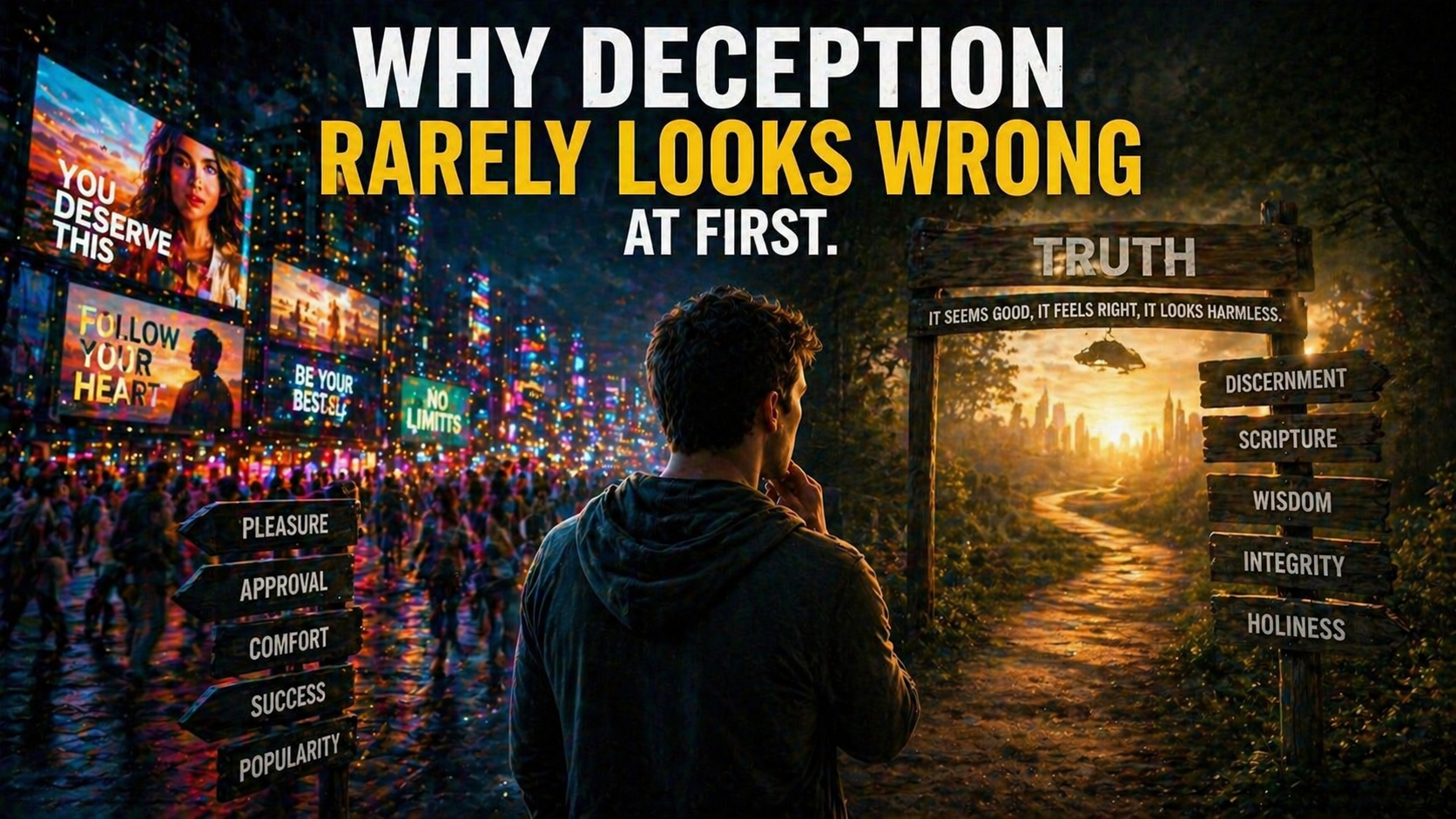
One of the most sobering things Jesus said was simply this:
“See that no one deceives you.” (Matthew 24:4)
Not if deception comes – when. And the reality is, deception rarely announces itself clearly.
- It doesn’t arrive looking completely false.
- It usually sounds close enough to truth to feel safe.
That’s what makes it dangerous.
- It can look like language that sounds spiritual but lacks substance.
- It can feel compassionate but drift from truth.
- It can appeal to emotions but bypass Scripture.
And unless we stay grounded, it’s easy to drift without noticing. This is why knowing truth deeply, not just casually, is so important.
Because the closer something is to truth, the harder it is to recognise when it isn’t.
What it really means to live ‘in the world, but not of it’.
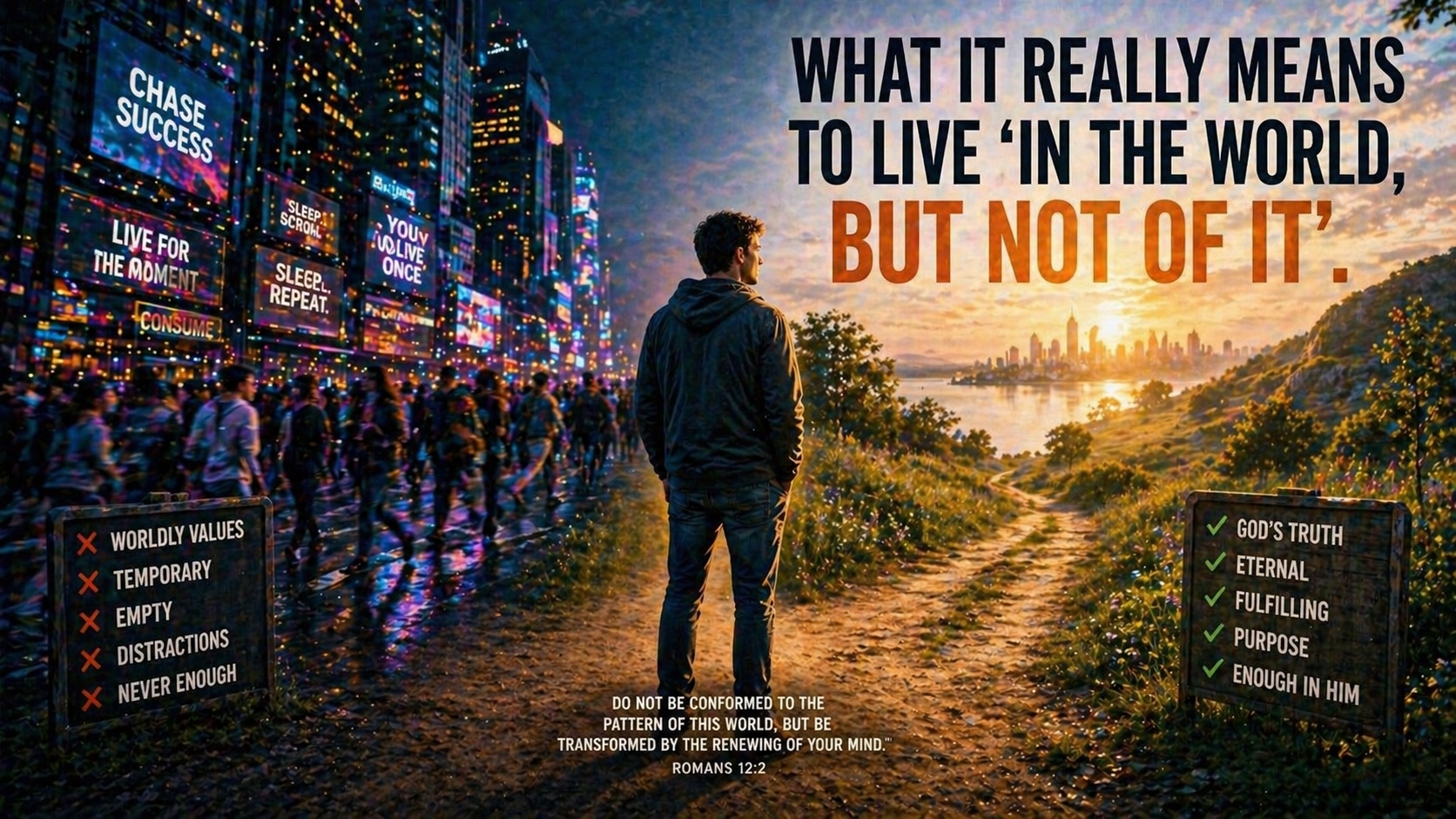
This is where everything comes together. Jesus never told His followers to withdraw from the world. He didn’t call them to isolation. He called them to live in it, but not be shaped by it.
That means engaging, working, speaking, building, loving… all while being anchored somewhere deeper.
It’s the difference between being influenced and being grounded.
- You can be present in culture without being formed by it.
- You can care deeply without compromising truth.
- You can love people without agreeing with everything around you.
But that kind of life doesn’t happen by accident. It’s intentional. It’s daily. And sometimes, it’s costly.
Because there will be moments when standing firm feels uncomfortable. When it would be easier to stay quiet. When blending in would feel simpler.
But those are often the very moments that define who we really are.
Living ready without becoming anxious.

When people hear about the return of Christ, it can sometimes create unease. But that was never the intention.
Jesus didn’t speak about His return to make people fearful, He spoke about it so they would be ready (Matthew 24:44).
There’s a difference.
Readiness isn’t panic. It’s alignment.
It’s knowing that your life is being shaped by truth. It’s staying close to God, not occasionally, but consistently. It’s living in such a way that, if He returned today, you wouldn’t need to scramble, you’d simply continue.
That kind of readiness brings peace, not pressure.
So where does that leave us – right here, right now?
At the end of the day, this isn’t just about culture or prophecy or even the Church as a whole. It comes back to something much more personal.
Each of us is being shaped by something. Sometimes it’s obvious. Other times it’s subtle. But over time, it shows, in what we prioritise, in how we respond, in what we quietly allow into our thinking.
And that leads to a simple but searching question:
What is shaping you right now?
Because we don’t drift into clarity. We don’t accidentally stay grounded. We choose, again and again, what we allow to form us.
A quiet but necessary challenge.

If Christ really is coming again – and He is, then the distinction between being in the world and being of it matters more than we often realise.
Not in a loud, dramatic way. But in the quiet, daily decisions that shape who we are becoming.
So maybe the real question isn’t just about the world around us.
Maybe it’s this:
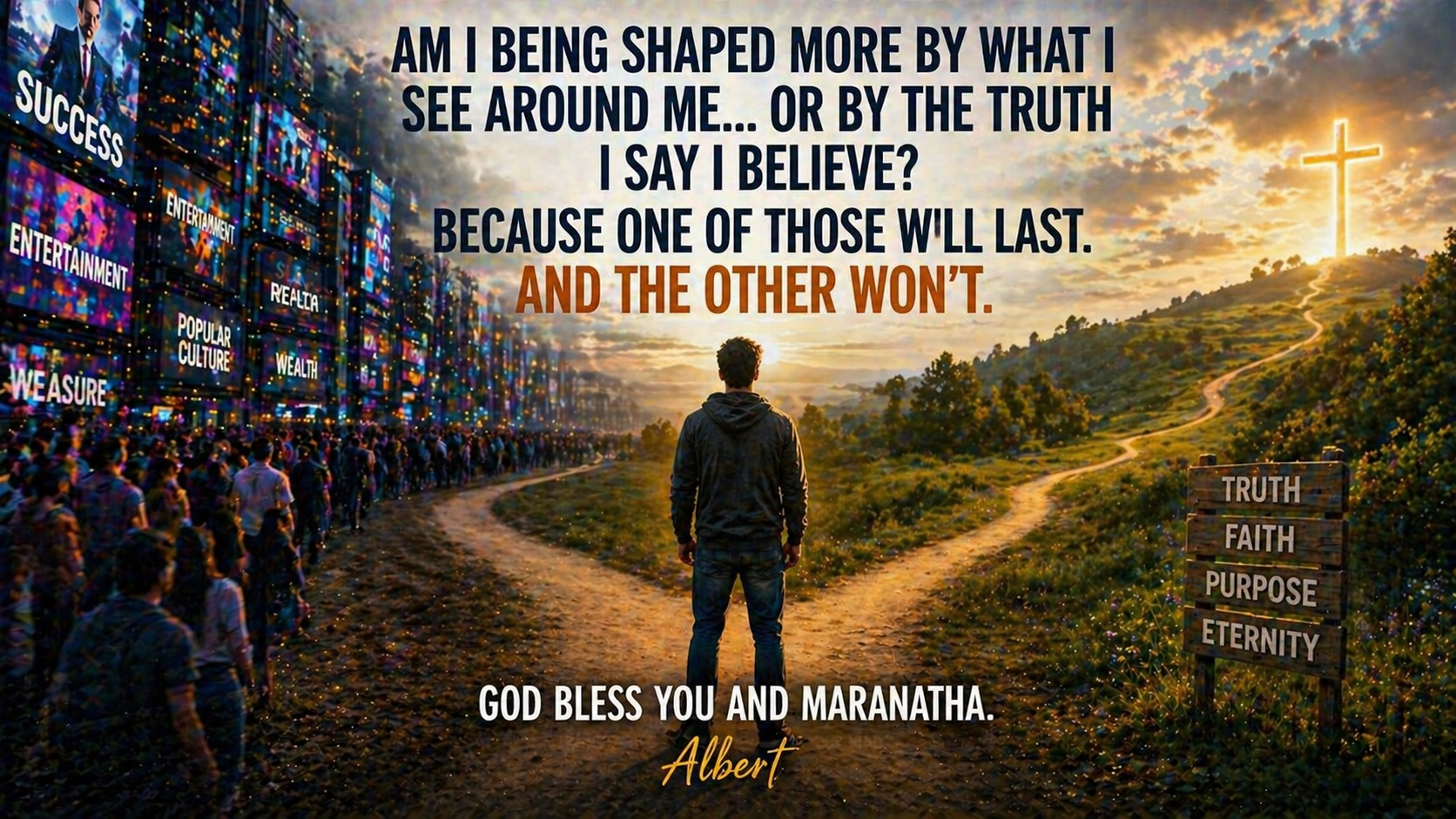
Am I being shaped more by what I see around me… or by the truth I say I believe?
Because one of those will last. And the other won’t.
God Bless You and Maranatha.
Albert
French
Dans le monde, sans être du monde – Vivre prêt dans une culture qui vous tire dans une autre direction
Publié le 25 avril 2026 par Albert Martin
Dans le monde, sans être du monde – Vivre prêt dans une culture qui vous tire dans une autre direction
Parlons franchement, un instant.
La plupart des croyants le ressentent, même s’ils ne savent pas toujours l’exprimer. Il existe une tension discrète qui traverse la vie quotidienne. Vous la percevez dans certaines conversations, dans ce qui est célébré autour de vous, et même parfois lorsque vous êtes assis à l’église en vous disant : « quelque chose semble légèrement décalé. »
C’est ce sentiment d’être pris entre deux influences : l’une vous entraînant dans le courant de la culture, l’autre vous appelant à vous en démarquer.
Et au cœur de cette tension se trouve une vérité que l’on n’entend plus assez aujourd’hui :
Christ revient.
Non pas comme une idée lointaine, ni comme un langage poétique, mais comme un moment réel et décisif de l’histoire vers lequel tout converge.
Pourquoi le retour de Christ change notre manière de vivre aujourd’hui
Lorsque Jésus a parlé de Son retour, Il ne l’a pas présenté comme un sujet secondaire. Ce n’était pas une théologie optionnelle pour les curieux, mais une réalité centrale pour la vie de Ses disciples.
Il a déclaré qu’un jour, on Le verrait « venant sur les nuées du ciel avec puissance et une grande gloire » (Matthieu 24:30). Luc le rapporte ainsi : « Alors on verra le Fils de l’homme venant sur une nuée avec puissance et une grande gloire » (Luc 21:27). Et Jean, dans l’Apocalypse, conclut : « Voici, Il vient avec les nuées. Et tout œil Le verra » (Apocalypse 1:7).
Les anges l’ont affirmé sans équivoque :
« Ce Jésus, qui a été enlevé au ciel du milieu de vous, reviendra de la même manière que vous L’avez vu allant au ciel. » (Actes 1:11)
Et c’est là que cela devient personnel.
Si nous croyons réellement cela, tout commence à changer en profondeur :
Nous commençons à voir différemment ce qui compte vraiment.
Nous devenons plus attentifs à notre manière de vivre.
Nous évaluons nos choix à la lumière de l’éternité.
Car s’Il revient, alors cette vie n’est pas simplement un passage — c’est une préparation.
Comment la culture façonne lentement ce que nous acceptons (si nous n’y prenons pas garde)
Le défi n’est pas toujours bruyant ou évident. Le plus souvent, il est subtil.
Ce n’est pas que les gens décident soudainement d’abandonner la vérité. C’est plutôt que les choses évoluent progressivement, jusqu’à ce que ce qui était autrefois clair devienne négociable.
Nous atténuons ce que nous affirmions autrefois avec conviction.
Nous reformulons certaines choses pour les rendre plus acceptables.
Nous évitons certaines vérités parce qu’elles dérangent.
Et sans nous en rendre compte, nous ne nous opposons plus au monde — nous commençons à lui ressembler.
Paul nous avertit clairement :
« Ne vous conformez pas au siècle présent, mais soyez transformés par le renouvellement de l’intelligence. » (Romains 12:2)
Le mot conformer évoque l’idée d’être façonné de l’extérieur.
Et si nous sommes honnêtes, cette influence est constante :
Par les médias.
Par les conversations.
Par les attentes.
Et, si nous osons le reconnaître, même par certains chants de louange contemporains.
Cela peut être difficile à admettre, mais c’est réel.
Car la louange ne se contente pas d’exprimer la foi — elle la façonne.
Si nos chants sont superficiels, nous le devenons aussi.
S’ils sont vagues, notre compréhension le devient également.
S’ils nous placent au centre plutôt que Dieu, notre foi glisse dans la même direction.
Attention : il existe aujourd’hui de nombreux chants puissants, centrés sur Christ.
Mais une tendance grandissante apparaît :
Le péché est à peine mentionné.
La croix est suggérée mais rarement expliquée.
La sainteté est absente.
L’expérience prend subtilement le pas sur la vérité.
Et à force, cela façonne notre vision de Dieu… sans que nous en ayons conscience.
Le danger n’est pas l’existence de la culture.
Le danger, c’est lorsqu’elle commence à définir ce que nous considérons comme juste — même dans l’Église.
Quand vouloir “rester pertinent” nous fait perdre notre centre
On entend souvent : « Il faut rester pertinent. »
Et bien sûr, la communication est importante. La clarté est importante.
Mais il existe une limite — et elle est fine.
Lorsque la pertinence devient prioritaire, la vérité devient modulable.
Et les signes apparaissent :
Des messages inspirants mais sans confrontation.
Un enseignement réconfortant mais sans correction.
Une foi sans exigence.
Il faut le dire clairement.
Il y a quelques semaines, j’ai entendu un message où le mot péché était mentionné… mais jamais défini.
Aucune précision. Aucune explication.
Et c’est un problème.
Car aujourd’hui, le péché a été redéfini.
Il devient :
Une erreur.
Un mauvais jugement.
Une faiblesse personnelle.
Ou simplement « ne pas être à la hauteur ».
Mais bibliquement, le péché est clair :
La désobéissance à Dieu (1 Jean 3:4)
Être privé de la gloire de Dieu (Romains 3:23)
Choisir soi-même plutôt que Dieu (Ésaïe 53:6)
Oui, c’est une offense à Sa sainteté.
Oui, cela attriste Son cœur.
Mais c’est aussi précis.
Et c’est crucial :
Sans une définition claire du péché, l’Évangile perd son sens.
Car si l’on ne comprend pas le péché, on ne comprend pas le besoin d’un Sauveur.
Et pour certains, ce moment d’écoute est peut-être le seul.
Dire la vérité avec clarté n’est pas dur — c’est aimer véritablement.
Reconnaître les temps sans perdre l’équilibre
Le monde change. C’est évident.
La vérité devient relative. Le bien et le mal se confondent.
Jésus l’avait annoncé :
« Comme aux jours de Noé… » (Matthieu 24:37–39)
La vie continuait normalement.
Et pourtant, quelque chose approchait.
Ce n’est pas le chaos qui surprend.
C’est la normalité.
Pourquoi la tromperie semble juste au départ
Jésus a dit :
« Prenez garde que personne ne vous séduise. » (Matthieu 24:4)
La tromperie ne paraît pas fausse.
Elle semble presque vraie.
C’est ce qui la rend dangereuse.
Ce que signifie réellement vivre dans le monde, sans être du monde
Jésus ne nous a pas appelés à fuir le monde.
Mais à y vivre sans en être façonnés.
Présents — mais ancrés ailleurs.
Vivre prêt, sans vivre dans l’anxiété
Jésus a parlé de Son retour pour nous préparer, non pour nous effrayer (Matthieu 24:44).
Être prêt, ce n’est pas paniquer.
C’est être aligné.
Alors, où cela nous laisse-t-il — ici et maintenant ?
Une question simple demeure :
Qu’est-ce qui vous façonne aujourd’hui ?
Un défi silencieux mais essentiel
Si Christ revient — et Il revient — alors la différence entre être dans le monde et être du monde est essentielle.
Alors posez-vous cette question :
Suis-je davantage façonné par ce que je vois… ou par la vérité que je crois ?
Car l’un demeure.
Et l’autre disparaît.
Que Dieu vous bénisse. Maranatha.
Albert
Portuguese:
No Mundo, Mas Não do Mundo – Viver Preparado numa Cultura que nos Puxa na Direção Oposta
Publicado em 25 de abril de 2026 por Albert Martin
No Mundo, Mas Não do Mundo – Viver Preparado numa Cultura que nos Puxa na Direção Oposta
Vamos falar com honestidade por um momento.
A maioria dos crentes sente isso, mesmo que nem sempre saiba colocar em palavras. Existe uma tensão silenciosa que percorre a vida diária. Você percebe isso em certas conversas, no que está a ser celebrado, e até, por vezes, quando está sentado na igreja e pensa: “algo não parece bem aqui.”
É aquela sensação de estar entre duas influências: uma que o puxa para o fluxo da cultura, e outra que o chama a viver de forma diferente.
E no centro dessa tensão está uma verdade que hoje em dia não se ouve com frequência suficiente:
Cristo está voltando.
Não como uma ideia distante, nem como linguagem simbólica, mas como um momento real e decisivo na história para o qual tudo está a caminhar.
Porque o retorno de Cristo muda a forma como vivemos hoje
Quando Jesus falou do Seu retorno, Ele não o apresentou como um tema secundário. Não era uma teologia opcional para os curiosos, mas algo central para a vida dos Seus seguidores.
Ele disse que um dia seria visto “vindo nas nuvens do céu, com poder e grande glória” (Mateus 24:30). Lucas regista de forma semelhante: “Então verão o Filho do Homem vindo numa nuvem, com poder e grande glória” (Lucas 21:27). E João, em Apocalipse, declara: “Eis que vem com as nuvens, e todo o olho O verá” (Apocalipse 1:7).
E os anjos confirmaram claramente:
“Esse mesmo Jesus, que dentre vós foi elevado ao céu, voltará da mesma forma como O vistes subir.” (Atos 1:11)
E aqui é onde se torna pessoal.
Se realmente acreditamos nisso, tudo começa a mudar:
-
- Começamos a ver de forma diferente o que realmente importa
-
- Passamos a estar mais conscientes de como estamos a viver
-
- Começamos a avaliar as nossas escolhas à luz da eternidade
Porque se Ele vai voltar, então esta vida não é apenas algo para atravessar — é algo que nos está a preparar.
Como a cultura molda lentamente o que aceitamos (se não tivermos cuidado)
O desafio raramente é óbvio ou barulhento. Na maioria das vezes, é subtil.
Não é que as pessoas decidam, de repente, abandonar a verdade. É que as coisas vão sendo ajustadas, pouco a pouco, até que aquilo que antes era claro começa a tornar-se negociável.
-
- Suavizamos aquilo que antes defendíamos com convicção
-
- Reinterpretamos certas coisas para que pareçam mais aceitáveis
-
- Evitamos verdades que são desconfortáveis de dizer
E, sem percebermos, deixamos de estar em contraste com o mundo — e começamos a refleti-lo.
As palavras de Paulo continuam a ser extremamente claras:
“Não vos conformeis com este mundo, mas transformai-vos pela renovação da vossa mente.” (Romanos 12:2)
A palavra conformar significa ser moldado de fora para dentro.
E se formos honestos, essa influência está sempre presente:
-
- através dos meios de comunicação
-
- através das conversas
-
- através das expectativas
-
- e até, se formos sinceros, através de algumas das músicas de adoração modernas
Isso pode ser desconfortável de admitir, mas é real.
Porque a adoração não apenas expressa a fé — ela molda-a.
-
- Se as músicas são superficiais, tornamo-nos superficiais
-
- Se são vagas, a nossa compreensão torna-se vaga
-
- Se nos colocam no centro em vez de Deus, a nossa fé começa a seguir o mesmo caminho
Existem, claro, muitas músicas poderosas e centradas em Cristo hoje em dia.
Mas também existe uma tendência crescente onde:
-
- o pecado raramente é mencionado
-
- a cruz é sugerida, mas não explicada
-
- a santidade está ausente
-
- e a experiência começa a substituir a verdade
E quando isso se torna consistente, molda a forma como as pessoas veem Deus… sem que percebam.
O problema não é a existência da cultura. O problema é quando ela começa a definir aquilo que consideramos certo — até dentro da Igreja.
Quando “manter-se relevante” começa a desviar-nos do centro
Ouvimos muitas vezes: “Precisamos de ser relevantes.”
E sim, comunicar bem é importante. Ser claro é importante.
Mas existe uma linha — e é muito fina.
Quando a relevância se torna a prioridade, a verdade torna-se ajustável.
E começam a surgir sinais:
-
- mensagens que inspiram, mas não confrontam
-
- ensinos que confortam, mas não corrigem
-
- uma fé que evita o custo do compromisso
Há algumas semanas, ouvi uma mensagem onde a palavra pecado foi mencionada… mas nunca definida.
Sem clareza. Sem explicação.
E isso é um problema.
Porque hoje o pecado foi redefinido.
Tornou-se:
-
- um erro
-
- uma falha de julgamento
-
- uma luta pessoal
-
- ou simplesmente “não dar o seu melhor”
Mas biblicamente, o pecado é claro:
-
- desobediência a Deus (1 João 3:4)
-
- ficar aquém da Sua glória (Romanos 3:23)
-
- escolher a si mesmo em vez de Deus (Isaías 53:6)
Se não houver clareza sobre o pecado, não haverá clareza sobre o Salvador.
Dizer a verdade com clareza não é falta de amor — é amor verdadeiro.
Reconhecer os tempos sem perder o equilíbrio
O mundo está a mudar. Isso é evidente.
Jesus disse que seria como nos dias de Noé (Mateus 24:37–39).
A vida continuava normalmente… até que tudo mudou.
O que surpreende não é o caos — é a normalidade.
Porque a enganação raramente parece errada no início
“Vede que ninguém vos engane.” (Mateus 24:4)
A enganação parece quase verdade.
E é isso que a torna perigosa.
O que realmente significa viver no mundo, mas não ser do mundo
Jesus não nos chamou para fugir do mundo, mas para viver nele sem sermos moldados por ele.
-
- Podemos estar presentes sem sermos influenciados
-
- Podemos amar sem comprometer a verdade
Viver preparado sem viver ansioso
“Estejam preparados.” (Mateus 24:44)
Estar preparado não é viver com medo — é viver alinhado.
Então, onde isso nos deixa — aqui e agora?
O que está a moldar a sua vida neste momento?
Não permanecemos firmes por acaso. Escolhemos isso.
Um desafio silencioso, mas necessário
Se Cristo vai voltar — e vai — então isto importa.
Estou a ser moldado pelo que vejo… ou pela verdade em que acredito?
Porque uma dessas coisas permanecerá.
E a outra não.
Deus o abençoe. Maranata.
Albert